Want to understand difference between Purchasing Power Parity (PPP) and Exchange rate, then you are at right place.
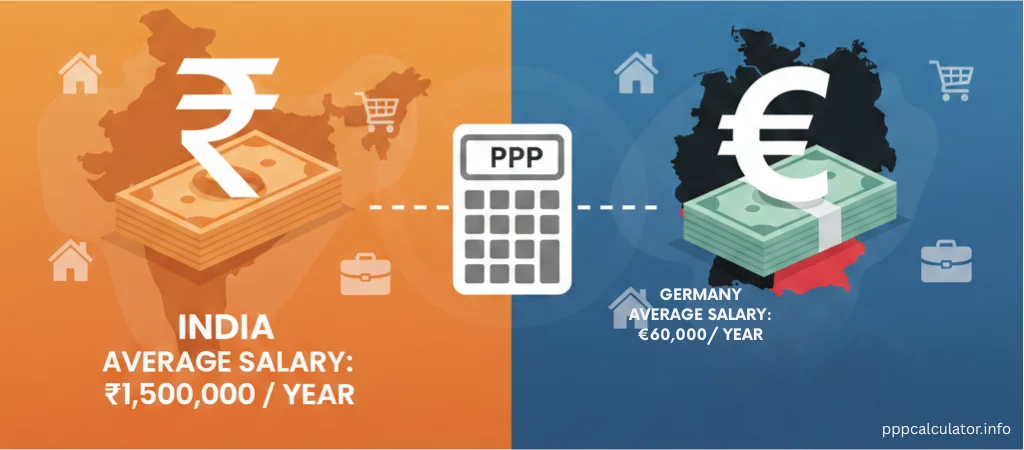
Say, you’re comparing job offers. One’s in New York paying $80,000. Another’s in Berlin paying €60,000. You check the exchange rate. €60,000 equals about $65,000. The New York job pays more, right?
Wrong. This is exactly where exchange rates mislead you.
Understanding PPP vs exchange rates changes how you evaluate opportunities.
Key Takeaways:
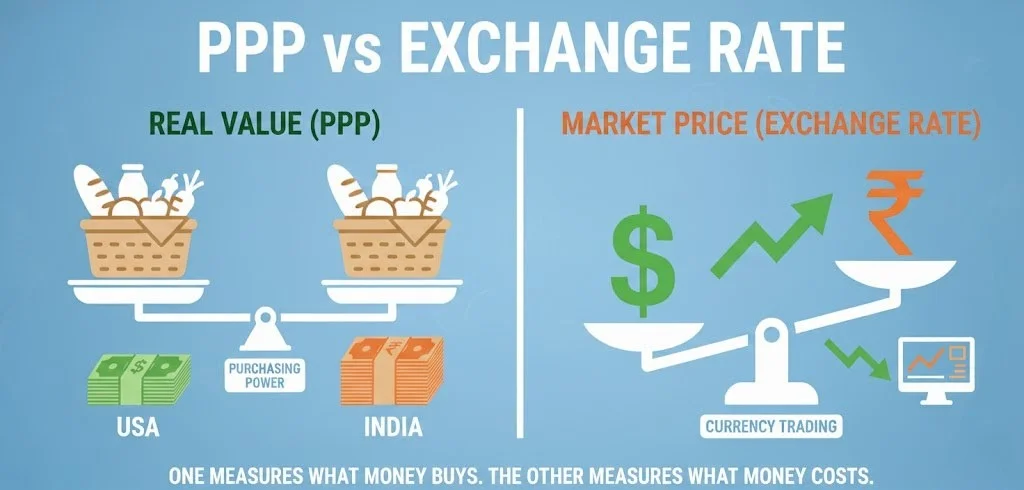
- Exchange rates show currency values but ignore what money actually buys in each country
- PPP reveals real purchasing power by comparing prices of the same goods across countries
- A $50,000 salary in India can provide a better lifestyle than $80,000 in San Francisco
- Use exchange rates for converting money but use PPP for comparing living standards and salaries
What Exchange Rates Actually Tell You
Exchange rates show how much one currency costs in another currency. That’s it.
If the exchange rate is 1 USD = 83 Indian Rupees, you can swap your dollars for rupees at that rate. You can send money internationally at that rate. You can buy foreign products at that rate.
But exchange rates don’t tell you anything about what your money can buy. They’re just conversion numbers.
Think of it this way. The exchange rate tells you how many rupees you get for your dollar. PPP tells you how many samosas you can buy with those rupees.
What PPP Reveals That Exchange Rates Hide
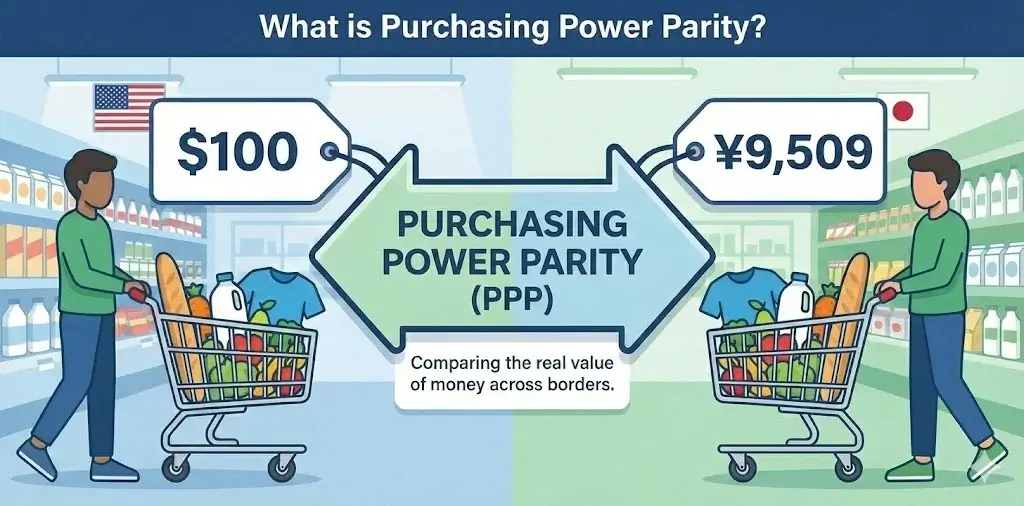
PPP compares the actual cost of living between countries. It asks: how much does the same stuff cost in different places?
The World Bank does this by tracking prices for hundreds of items. Bread, eggs, rent, haircuts, bus tickets. They compare these prices across 180+ countries.
This reveals something crucial. A dollar doesn’t buy the same amount everywhere.
In Mumbai, $100 might cover a week of groceries for a family. In Manhattan, it barely covers two days. The exchange rate doesn’t show you this. PPP does.
Real Example: Software Engineer Salary Comparison
Let’s compare two real job offers using both methods.
Job A: San Francisco – $120,000/year
Job B: Bangalore – ₹3,000,000/year
Using exchange rates only (1 USD = 83 INR):
- Bangalore salary = $36,145
- San Francisco pays 3.3x more
- San Francisco seems obviously better
Using PPP (India’s PPP factor: 20.2026):
- Bangalore’s real purchasing power = ₹3,000,000 ÷ 2.026 = $148,496 equivalent
- San Francisco’s real purchasing power = $120,000
- Bangalore actually provides 12% more purchasing power
Same money. Completely different story.
The Big Mac Test: PPP Made Simple
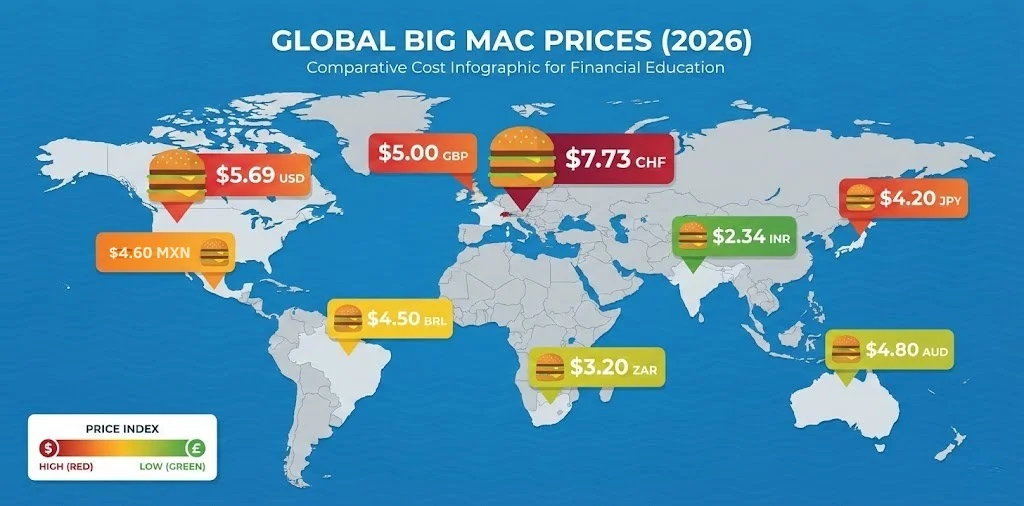
The Economist magazine created the Big Mac Index to explain PPP. It’s brilliant in its simplicity.
A Big Mac costs $5.69 in the United States. The same burger costs 2.99€ in Germany. At today’s exchange rate, that’s about $3.25.
The exchange rate says the German Big Mac costs $3.25. But you’re getting the same burger. Same ingredients. Same experience.
This gap shows you something important. Your money goes further in Germany than the exchange rate suggests. That’s PPP in action.
When Exchange Rates Mislead Most
Exchange rates fail you in these situations:
- Comparing salaries across countries: A $60,000 salary means vastly different things in different places. Exchange rates can’t capture this.
- Planning international moves: You need to know what your money will actually buy, not just how to convert it.
- Evaluating remote work opportunities: Many companies now hire globally. Using exchange rates alone costs you money.
- Setting fair international pay:HR teams using only exchange rates either overpay or underpay drastically.
When to Use PPP vs Exchange Rates
Use exchange rates when you’re:
- Actually converting money between currencies
- Sending money internationally
- Buying imported products
- Trading currencies or investments
- Traveling short-term
Use PPP when you’re:
- Comparing salaries across countries
- Planning to live somewhere long-term
- Evaluating job offers in different countries
- Setting international compensation
- Comparing living standards
Why the Gap Exists Between PPP and Exchange Rates
Several factors create the gap between PPP and exchange rates.
Non-tradable goods like haircuts, rent, and local services don’t cross borders. Their prices vary wildly. A haircut in Switzerland costs $50. In Vietnam, it’s $3. Exchange rates don’t account for this.
Local market conditions matter. Labor costs differ. Regulations differ. Competition levels differ. All this affects prices.
Currency speculation drives exchange rates up and down. Traders buy and sell currencies based on many factors. These have nothing to do with actual purchasing power.
How to Calculate Both Methods
Exchange Rate Calculation: Foreign salary ÷ exchange rate = Home currency equivalent
Example: ₹3,000,000 ÷ 83 = $36,145
PPP Calculation: Foreign salary ÷ PPP conversion factor = Real purchasing power
Example: ₹3,000,000 ÷ 20.026 = $149,805
The difference here is massive. Using the wrong method costs you tens of thousands of dollars in this example.
Common Mistakes People Make
Mistake 1: Using exchange rates for salary decisions
You see a €50,000 salary in Portugal. You convert it to dollars and think it’s low. But €50,000 in Lisbon provides a comfortable lifestyle that might require $80,000 in Boston.
Mistake 2: Ignoring local price levels
You assume costs scale with exchange rates. They don’t. Housing in Tokyo is expensive even though the yen is weak.
Mistake 3: Mixing the two methods
You convert salary with exchange rates but estimate expenses with PPP. This gives you meaningless numbers.
Mistake 4: Forgetting currency volatility
Exchange rates change daily. PPP changes slowly. Using volatile exchange rates for long-term planning is risky.
Real Impact on Your Finances
These differences aren’t theoretical. They affect real decisions.
A friend moved from Seattle to Mexico City for a remote job. His salary dropped from $95,000 to $65,000. He worried about the cut.
Using exchange rates, he was taking a 32% pay cut. But using PPP, his purchasing power actually increased by 15%. His rent dropped from $2,400 to $800. His groceries cost half as much. He ate out more and saved more.
He would have rejected the offer if he’d only looked at exchange rates.
How Companies Use PPP for Fair Pay
Smart companies now use PPP for international hiring. They don’t pay the same dollar amount everywhere. They pay for equivalent purchasing power.
A software engineer in San Francisco might get $140,000. The same engineer in Prague might get $60,000. Different numbers, similar lifestyle.
Some companies use location-based pay scales. Others use PPP adjustment factors. But they’ve learned that exchange rates alone create massive pay inequities.
Try PPP calculator to see how your salary compares across countries using real purchasing power data.
Limitations of Both Methods
Neither method is perfect.
Exchange rates change constantly. Political events, interest rates, and speculation move them around. Using them for long-term planning is tricky.
PPP updates slowly. World Bank data comes out annually. Rapid changes in local economies might not show up immediately.
PPP also assumes similar consumption patterns everywhere. But people in different countries buy different things. Your spending habits matter.
Which Method Should You Trust?
For anything involving your actual lifestyle and purchasing power, trust PPP.
Exchange rates work for the banking system and currency traders. PPP works for real people making real decisions about where to live and work.
Think about what you’re trying to understand. Currency conversion or living standards? Money movement or purchasing power?
The answer tells you which method to use.
Making Smarter International Decisions
Understanding Purchasing Power Parity (PPP) vs exchange rates helps you in taking right decisions.
That job in Portugal doesn’t look low-paying anymore. That offer in Singapore makes more sense. That remote position in Mexico becomes attractive.
You stop thinking about currency numbers. You start thinking about actual lifestyle and purchasing power.
This is how you make smart international decisions. Not by converting currencies, but by understanding what money actually buys.