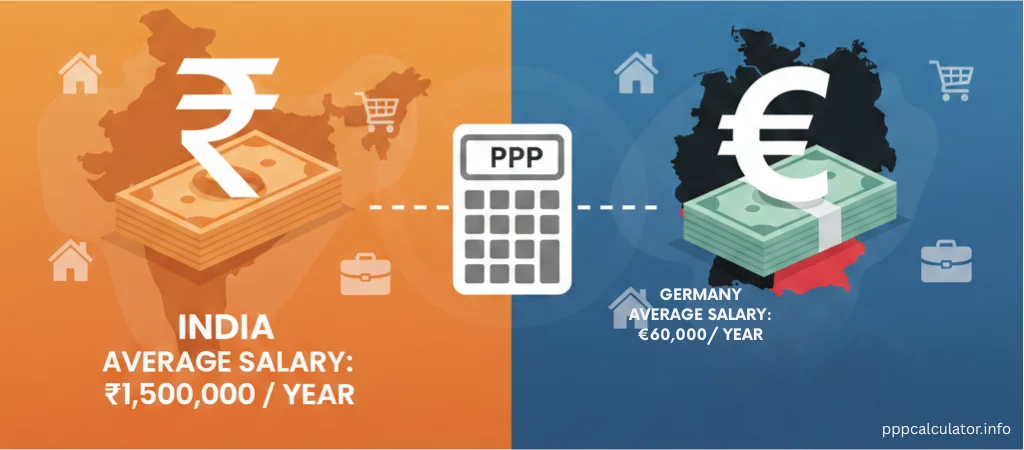
Making the move from India to Germany for work? Or considering a job offer that takes you from Munich to Mumbai? Understanding the real value of your salary is crucial before making this life-changing decision.
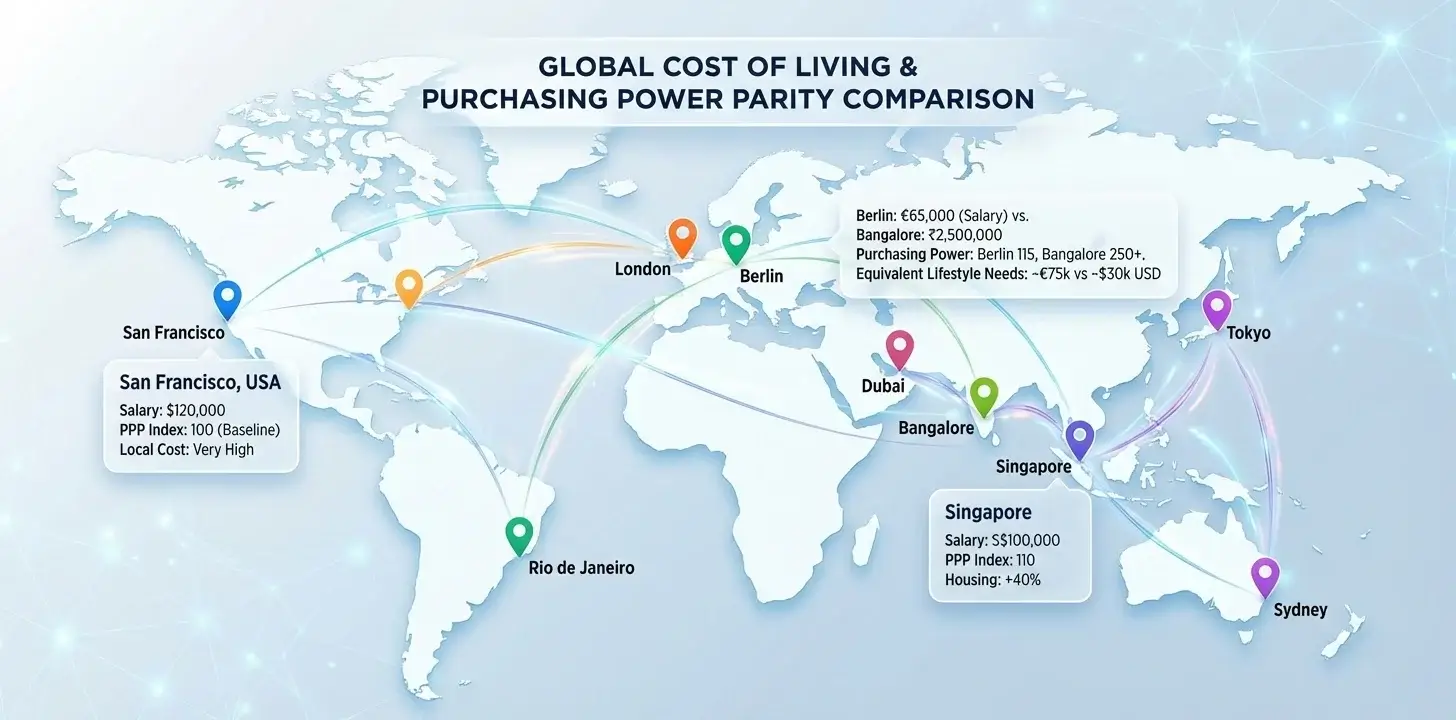
A €60,000 salary in Berlin doesn’t buy the same lifestyle as ₹50 lakhs in Bangalore. Currency exchange rates tell you how much foreign money you’ll get, but they don’t reveal what your money actually buys. That’s where purchasing power parity comes in.
PPP Calculator India vs Germany shows you the true purchasing power of your salary across India and Germany. Whether you’re a software engineer negotiating a remote work package, an expat evaluating a job offer, or an HR professional setting fair international compensation, this guide gives you the real numbers you need.
Key Takeaways
- Cost difference is dramatic: Germany’s living expenses run 250-300% higher than India across housing, food, and transportation.
- PPP reveals the truth: A €60,000 Berlin salary equals approximately ₹33 lakhs in Indian purchasing power, not the ₹52+ lakhs that currency exchange suggests.
- Benefits matter significantly: German salaries include comprehensive healthcare, pension, unemployment insurance, and 25-30 vacation days, benefits that cost ₹2-5 lakhs annually in India.
- Tax structures differ: Germany deducts 35-45% for taxes and social contributions but funds extensive public services, while India’s 20-30% rates require more private spending.
- Remote work wins financially: International salaries paid while living in India provide the highest purchasing power by combining high income with low living costs.
- Visa requirements are clear: Germany requires €48,300 minimum salary for EU Blue Card (€43,760 for IT/STEM shortage roles), making most professional offers visa-eligible.
Understanding PPP: Why Your Salary Isn’t What It Seems
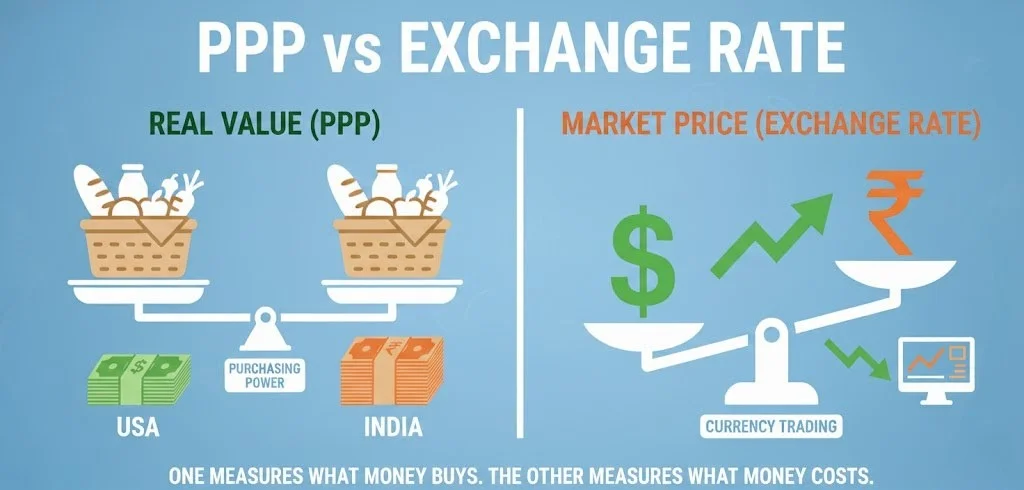
Purchasing power parity measures what your money can actually buy in different countries. It accounts for the real cost of rent, groceries, transportation, healthcare, and entertainment.
Here’s why this matters: €50,000 in Germany requires different purchasing power than the rupee equivalent in India. The exchange rate converts currency, but PPP converts lifestyle.
Think of it this way. Your monthly rent in Bangalore might be ₹30,000 for a nice two-bedroom apartment. In Berlin, that same apartment costs €1,200 or more. The exchange rate converts those numbers, but PPP tells you what salary you need to maintain the same standard of living.
India vs Germany: The Economic Reality
Germany’s cost of living is approximately 200-250% higher than India’s, but salaries are also significantly higher. The Purchasing Power Parity calculator helps you understand if a job offer maintains, improves, or reduces your purchasing power when moving between these countries. German social benefits, tax structure, and quality of life factors create additional value beyond raw salary numbers.
- India and Germany represent two vastly different economic landscapes. India offers lower living costs but also lower average salaries. Germany provides higher wages but with substantially higher expenses.
- Cost of living in Germany runs about three times higher than India. A meal at an inexpensive restaurant costs €15 in Berlin compared to ₹300 in Mumbai. Monthly public transport passes run €90 in German cities versus ₹1,500 in Indian metros.
- But here’s what makes the comparison complex: German salaries often come with comprehensive social benefits. Healthcare coverage, pension contributions, paid vacation time, and parental leave add real value to your compensation package.
- The German tax system differs dramatically from India’s structure. Progressive tax rates in Germany can reach 45% for high earners, while India’s top rate sits at 30%. However, German taxes fund extensive public services, infrastructure, and social security benefits.
India vs Germany: Quick Comparison Overview
| Factor | India | Germany |
|---|---|---|
| Average IT Salary (Mid-Level) | ₹12-25 lakhs/year | €60,000-80,000/year |
| Cost of Living Index | 100 (baseline) | 250-300 |
| Rent (1BR City Center) | ₹25,000-40,000/month | €900-1,400/month |
| Income Tax Rate (Mid-Level) | 20-30% | 35-42% |
| Healthcare Cost (Annual) | ₹15,000-50,000 (private) | ~15% of salary (covered) |
| Public Transport (Monthly) | ₹800-1,500 | €80-100 |
| Restaurant Meal (Basic) | ₹200-400 | €12-18 |
| Groceries (Monthly, Single) | ₹6,000-10,000 | €250-350 |
| Work Week Hours | 45-50 hours (typical) | 40 hours (standard) |
| Paid Vacation Days | 12-20 days | 25-30 days |
Note: Indian figures represent major metro cities (Mumbai, Bangalore, Delhi). German figures represent major cities (Berlin, Munich, Frankfurt). Actual costs vary by specific location.
How to Use the PPP Calculator for India-Germany Comparison
Our calculator at pppcalculator.info makes salary comparison between India Germany simple. Enter your current salary and location, then select your target country. The tool shows you the equivalent purchasing power instantly.
- Start by identifying your current gross annual salary. If you’re in India, use your annual CTC or in-hand salary in rupees. For Germany-based salaries, use your gross annual income in euros.
- Select India or Germany as your source country, then choose the other as your target. The calculator uses World Bank PPP conversion factors to show you the equivalent purchasing power.
- Pay attention to what the numbers mean. If you enter €60,000 in Germany and select India as your target, the output shows what you’d need to earn in India to maintain the same purchasing power. This isn’t currency conversion, it’s lifestyle comparison.
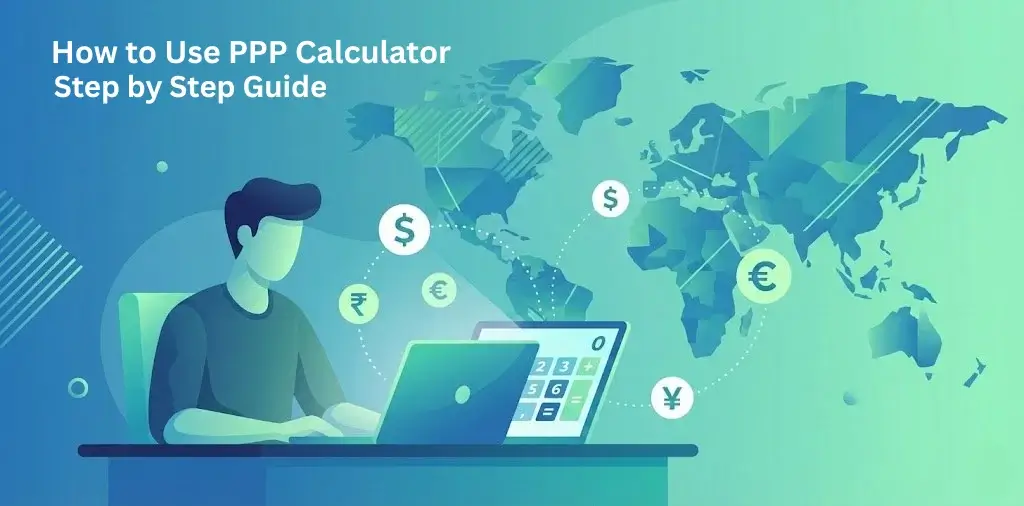
Here is step by step guide for how to use PPP Calculator for India vs Germany
Here’s a verified example:
To match the purchasing power of €60,000 in Germany, you would need approximately ₹33 lakhs in India. That means your money goes much further in India than Germany for the same lifestyle.
The reverse calculation works differently. If you earn ₹20 lakhs in India and want to match that purchasing power in Germany, you’d need around €36,000. Both calculations are correct because they measure different economic realities.
Real Salary Examples: India to Germany
Let’s look at verified scenarios that show how PPP works in practice between these countries.
- Software Engineer Example: A software engineer earning ₹25 lakhs annually in Bangalore considers a Berlin job offer of €55,000. Using our PPP calculator, that ₹25 lakhs provides purchasing power equivalent to approximately €45,000 in Germany. The German offer of €55,000 actually represents an increase in purchasing power, despite the higher cost of living.
- Product Manager Scenario: A product manager in Mumbai earns ₹40 lakhs per year. To maintain the same purchasing power in Munich, they would need approximately €72,000. If the German offer comes in at €65,000, it means accepting a reduction in purchasing power despite the nominally higher salary.
- Data Scientist Comparison: A data scientist moving from Pune to Frankfurt with a ₹30 lakh salary needs roughly €54,000 to maintain equivalent purchasing power. German companies typically offer €60,000-€75,000 for similar roles, representing a real increase in purchasing power.
These examples show why understanding PPP matters. A larger number doesn’t always mean better purchasing power. The calculator reveals the truth behind the salary figures.
Real Salary Examples: Germany to India
The calculation reverses when moving from Germany to India, often revealing surprising results.
- Engineering Manager Example: An engineering manager earning €80,000 in Berlin considers returning to India. That salary provides purchasing power equivalent to approximately ₹1.4 crore in India. Indian companies might offer ₹60-80 lakhs for equivalent roles, representing a significant reduction in purchasing power.
- Marketing Director Scenario: A marketing director in Hamburg earns €70,000. To match that purchasing power in Delhi requires approximately ₹1.2 crore annually. Most Indian marketing director roles pay ₹50-90 lakhs, meaning a move involves accepting lower purchasing power.
- UX Designer Comparison: A UX designer making €50,000 in Cologne has purchasing power equivalent to roughly ₹88 lakhs in India. Indian design roles typically offer ₹20-40 lakhs, showing a substantial gap in purchasing power despite lower living costs.
Moving from Germany to India often means accepting reduced purchasing power, even with competitive Indian salaries. However, other factors like family connections, career opportunities, or quality of life preferences may outweigh pure financial calculations.
Cost of Living Germany vs India
Understanding specific expense categories helps contextualize PPP calculations and salary decisions.
1. Housing Costs
Rent represents the largest expense difference between India and Germany. A one-bedroom apartment in city center Bangalore costs ₹25,000-40,000 monthly. The same apartment in Berlin runs €900-1,400, roughly three times higher when converted.
German cities like Munich and Frankfurt command even higher rents, with one-bedroom apartments exceeding €1,500. Meanwhile, cities like Pune or Hyderabad offer similar quality housing for ₹20,000-35,000.
Security deposits differ too. India typically requires 2-3 months rent upfront. Germany often demands 3 months rent as deposit, plus the first month in advance. Factor these upfront costs into your relocation budget.
2. Food and Groceries
Grocery costs in Germany run approximately 2-3 times higher than India. Basic items like milk, bread, and vegetables cost more, but quality standards and food safety regulations differ.
Restaurant meals show similar patterns. A basic meal in India costs ₹200-400, while Germany charges €12-18. However, Indian restaurants in Germany cost significantly more than authentic local dining back home.
Cooking at home in Germany costs less than frequent dining out, just like India. But the baseline grocery expense remains substantially higher. Budget accordingly when calculating your required salary.
3. Transportation
Public transportation in German cities is excellent but expensive. Monthly passes cost €80-100 depending on the city. India’s metro systems charge ₹800-1,500 monthly for similar coverage.
Car ownership tells a different story. Vehicles cost more in Germany, but fuel efficiency standards are higher. Insurance, maintenance, and parking add to German car ownership costs significantly.
Many Indian cities require car ownership for convenience, while German public transport often makes cars unnecessary. Factor transportation lifestyle into your PPP calculations, not just raw costs.
4. Healthcare and Insurance
Healthcare structures differ fundamentally between India and Germany. German health insurance is mandatory and costs roughly 15% of gross salary, split between employer and employee. This provides comprehensive coverage with minimal out-of-pocket costs.
India offers both government healthcare and private options. Many professionals maintain private health insurance costing ₹15,000-50,000 annually. Out-of-pocket medical expenses can be substantial without proper coverage.
German healthcare appears expensive on paper, but actual medical costs are largely covered. Indian healthcare can seem cheaper until a serious medical situation arises. PPP calculations should account for these structural differences.
Tax Implications: What You Actually Take Home
Understanding net salary after taxes is crucial for accurate PPP comparison.
German Tax Structure
Germany uses a progressive tax system with six tax classes based on marital status and family situation. Single professionals fall into Tax Class I, facing these brackets:
Income up to €11,604 is tax-free. Income between €11,604-€66,760 is taxed at 14-42%. Income above €277,825 is taxed at 45%. These rates apply to taxable income after deductions.
Social contributions add to the burden. Health insurance costs 14.6% plus approximately 2.9% supplementary contribution, split between employer and employee. Pension insurance takes 18.6%, unemployment insurance 2.6%, and care insurance 3.4%, all split equally.
A €60,000 gross salary results in approximately €38,000-40,000 net after all deductions. That’s roughly 63-67% take-home, significantly lower than India’s take-home percentages.
Indian Tax Structure
India’s income tax uses different slabs under the new tax regime. Income up to ₹3 lakhs is tax-free. Income between ₹3-6 lakhs is taxed at 5%. The rate increases progressively to 30% for income above ₹15 lakhs, plus 4% cess.
Social security contributions through EPF (Employee Provident Fund) take 12% of basic salary, with employer matching. Professional tax varies by state but typically doesn’t exceed ₹2,500 annually.
A ₹25 lakh salary might result in ₹19-20 lakh take-home, representing 76-80% of gross. Higher take-home percentages mean more money for daily expenses and savings.
Take-Home Pay Comparison: India vs Germany
| Component | India (₹25 lakhs gross) | Germany (€60,000 gross) |
|---|---|---|
| Gross Annual Salary | ₹25,00,000 | €60,000 |
| Income Tax | ₹3,50,000 (14%) | €12,000 (20%) |
| Social Contributions | ₹1,20,000 (EPF 12%) | €10,500 (17.5%) |
| Total Deductions | ₹4,70,000 (19%) | €22,500 (37.5%) |
| Net Annual Salary | ₹20,30,000 | €37,500 |
| Net Monthly Salary | ₹1,69,167 | €3,125 |
| Take-Home Percentage | 81% | 62.5% |
Note: Calculations are approximate and assume single tax filer, Tax Class I in Germany. Actual deductions vary based on individual circumstances, state, and specific benefits. German figures include health insurance, pension, unemployment, and care insurance.
Work Visa Requirements and Salary Thresholds
Moving between India and Germany requires understanding visa regulations and minimum salary requirements.
Germany Work Visa for Indian Professionals
The EU Blue Card is the primary pathway for skilled Indian professionals. Germany work visa salary requirements include a recognized university degree, a concrete job offer, and minimum salary thresholds.
For 2026, the standard EU Blue Card requires €48,300 annual gross salary. Shortage occupations like IT, engineering, and mathematics require only €43,760. These thresholds ensure foreign workers earn competitive wages.
The Skilled Worker Visa offers another option for qualified professionals. It requires a recognized qualification, a specific job offer, and approval from the Federal Employment Agency. Salary must match German standards for the position.
IT professionals benefit from special provisions. With two years of relevant experience, Indian IT workers can qualify even without formal university degrees. This recognizes practical skills over academic credentials.
Indian Work Visa for German Professionals
German professionals moving to India typically use the Employment Visa. Requirements include a job offer from an Indian company, minimum salary of $25,000 annually for regular employment visas, and relevant qualifications.
Business Visa allows German nationals to explore opportunities, attend meetings, and establish business contacts. It cannot be used for actual employment but serves as a useful entry point.
Processing times differ significantly. German visa applications from India take 8-12 weeks on average. Indian visa applications from Germany process faster, often within 4-6 weeks.
Beyond Salary: Quality of Life Factors
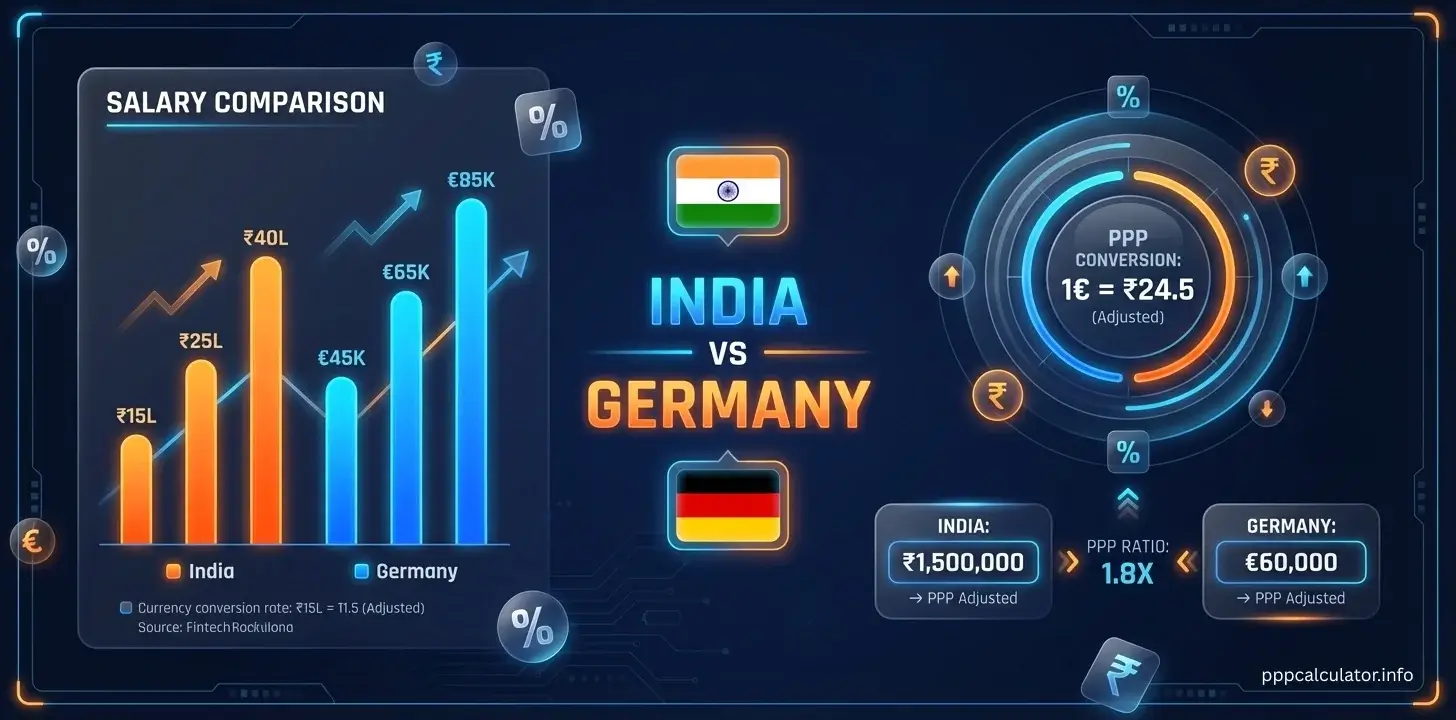
PPP calculations focus on purchasing power, but other factors influence your decision.
Work Culture and Hours
German work culture emphasizes work-life balance. Standard work week is 40 hours with strictly enforced limits. Most employees get 25-30 vacation days annually plus public holidays.
Indian work culture, especially in tech sectors, often demands longer hours. Startups and competitive industries may expect 50-60 hour weeks. Vacation days average 12-20 annually depending on company policy.
German overtime is regulated and often compensated with time off. Indian overtime is common but not always compensated. Factor working hours into your quality of life assessment beyond pure salary.
Healthcare Quality
Germany’s healthcare system ranks among the world’s best. Universal coverage, modern facilities, and preventive care are standard. Wait times for specialists are reasonable, emergency care is excellent.
India offers world-class private healthcare in major cities, but quality varies. Government hospitals are overcrowded, while private facilities can be expensive. Healthcare access depends heavily on location and insurance coverage.
Chronic condition management is excellent in Germany with comprehensive support. India’s healthcare shines in specific treatments but lacks consistency across the system.
Education System
German public education is free through university level, including for expatriate children. Universities charge minimal semester fees, typically €300-500. Quality is high and standardized across the country.
India offers both government and private education options. Private international schools in major cities cost ₹2-8 lakhs annually. Indian universities charge varying fees depending on institution and program.
For families with children, German education costs are significantly lower over time despite higher living costs. This factor can offset salary differences in long-term financial planning.
Social Security and Retirement
German pension system provides robust retirement benefits. Contributions during working years ensure decent retirement income. The system is reliable and well-funded despite demographic challenges.
India’s EPF and NPS provide retirement savings, but benefits are typically lower. Many professionals supplement with private investments and property. Retirement planning requires more personal initiative.
German unemployment benefits support job seekers for extended periods. Indian unemployment support is limited, making job security more critical in career decisions.
Making Your Decision: When to Move and When to Stay
Use PPP calculations as one input in your decision-making process, not the only factor.
When Germany Makes Financial Sense
- Move to Germany when the salary offer provides at least 20-30% more purchasing power than your current Indian income. This buffer covers adjustment costs and provides real improvement.
- Early to mid-career professionals often benefit most from German moves. The combination of higher purchasing power, skill development, and career growth creates strong value.
- Consider Germany if you value comprehensive social benefits, healthcare security, and retirement planning. These factors become more valuable with age and family responsibilities.
When India Makes Financial Sense
- Senior professionals with established careers may find better purchasing power in India. High salaries at director level or above go much further in Indian cities than German equivalent salaries.
- Consider India if you have strong family support networks, property investments, or established businesses. These factors provide financial security beyond salary calculations.
- Remote work opportunities that pay global salaries while living in India offer the best financial outcome. Lower costs with high income maximize purchasing power dramatically.
Common Mistakes in India-Germany Salary Comparison
Avoid these errors when evaluating job offers between India and Germany.
- Never compare gross salaries without calculating net take-home pay. German tax rates reduce gross salary significantly more than Indian rates. A €70,000 German offer isn’t automatically better than ₹50 lakhs in India. Calculate both net salaries, then apply PPP to understand real purchasing power. This two-step process reveals the true financial picture.
- German salaries include comprehensive benefits that cost extra in India. Healthcare, pension, unemployment insurance, and vacation time add substantial value beyond salary numbers. Add the cost of Indian private health insurance, retirement savings, and other benefits to your required salary. The true comparison includes these typically employer-covered costs in Germany.
- Relocation Cost: Moving to Germany costs ₹3-6 lakhs for visa fees, relocation expenses, deposits, and initial setup. These upfront costs affect your first year financial situation significantly. Budget for three months expenses before your first salary. German bureaucracy delays can postpone income, and setup costs add up quickly. Don’t accept an offer without accounting for these expenses.
- Using Exchange Rate instead of PPP: Currency exchange rates change daily and don’t reflect purchasing power. A salary that looks good based on today’s exchange rate might lose value if currency shifts. PPP provides stable comparison based on actual price levels, not currency fluctuations. Use PPP for long-term decisions, not exchange rates.
- Overlooking Career Growth Opportunities: Short-term purchasing power matters, but career trajectory affects long-term earnings. German experience, international exposure, and skill development may justify accepting lower immediate purchasing power. Evaluate five-year and ten-year career implications. Sometimes accepting a role with slightly lower current purchasing power positions you for much higher future earnings.
Practical Steps: Using the Calculator for Your Decision
Follow this framework to make informed salary decisions between India and Germany.
Step 1: Calculate Current Purchasing Power
Enter your current Indian salary into our PPP calculator India Germany. Select India as your source country and Germany as target. Note the equivalent German salary figure.
This number shows what you’d need in Germany to maintain your current lifestyle. Use it as your minimum acceptable German salary, not your target.
Step 2: Evaluate German Job Offers
When you receive a German job offer, compare it to your PPP baseline from Step 1. If the offer exceeds your baseline by 20%+ you’re gaining purchasing power. If it’s below, you’re losing purchasing power.
Factor in intangible benefits like skill development, career growth, and international experience. These may justify accepting a role even if purchasing power is similar or slightly lower.
Step 3: Calculate German to India Return
If considering returning to India from Germany, enter your German salary and select India as target. The output shows what Indian salary maintains your German purchasing power.
Be realistic about Indian salary offers. Most won’t match this figure, especially at senior levels. Decide if other factors make the reduction acceptable.
Step 4: Factor in Hidden Costs
Add relocation costs, visa fees, tax differences, and benefit values to your calculation. Create a spreadsheet comparing total compensation packages, not just base salary.
Include variables like bonus structure, stock options, healthcare costs, and retirement contributions. The complete picture reveals true financial impact.
Step 5: Run Different Scenarios
Calculate PPP for different German cities if considering multiple offers. Munich, Berlin, and Frankfurt have different cost levels. Your required salary varies by location.
Test different career scenarios. What if you get promoted in two years? How does that affect PPP? Think through the trajectory, not just the starting point.
Make smarter career decisions with real data
Use our India Germany salary calculator to compare your salary’s true value between India and Germany. Whether you’re negotiating a new role, evaluating an international offer, or planning a return home, understanding purchasing power helps you make confident choices.
Calculate your purchasing power now and see what your salary really buys across borders.
PPP Calculator India vs Germany: FAQ
Ans: Our calculator uses official World Bank PPP conversion factors, the same data international economists use. It provides accurate purchasing power comparisons based on standardized price levels. However, individual spending patterns may vary, and some expenses like housing can differ significantly even within the same country.
Ans: Use net salary for the most accurate comparison. Tax rates differ dramatically between India and Germany, affecting take-home pay significantly. Calculate net salary first, then apply PPP conversion to understand real purchasing power. Our calculator works with gross figures but explains that net salary provides better insight.
Ans: The calculator focuses on purchasing power of salary. German benefits like comprehensive healthcare, pension contributions, and unemployment insurance add value beyond raw salary numbers. Factor these benefits separately when evaluating total compensation. They typically represent 15-20% additional value.
Ans: Recalculate PPP when you receive a formal job offer, before final negotiations, and if exchange rates or living costs change significantly. World Bank updates PPP data annually, so check for updates yearly if planning a future move. Our calculator uses the latest available data.
Ans: Absolutely. PPP data provides objective evidence for salary negotiations. Show employers that you’ve calculated purchasing power needs based on official data. Many international companies understand PPP and use it internally for compensation decisions. Present your research professionally during negotiations.