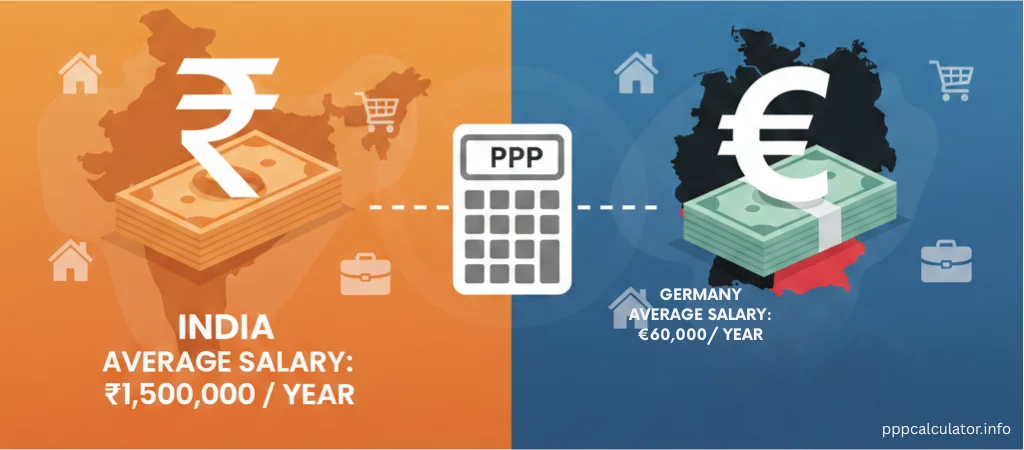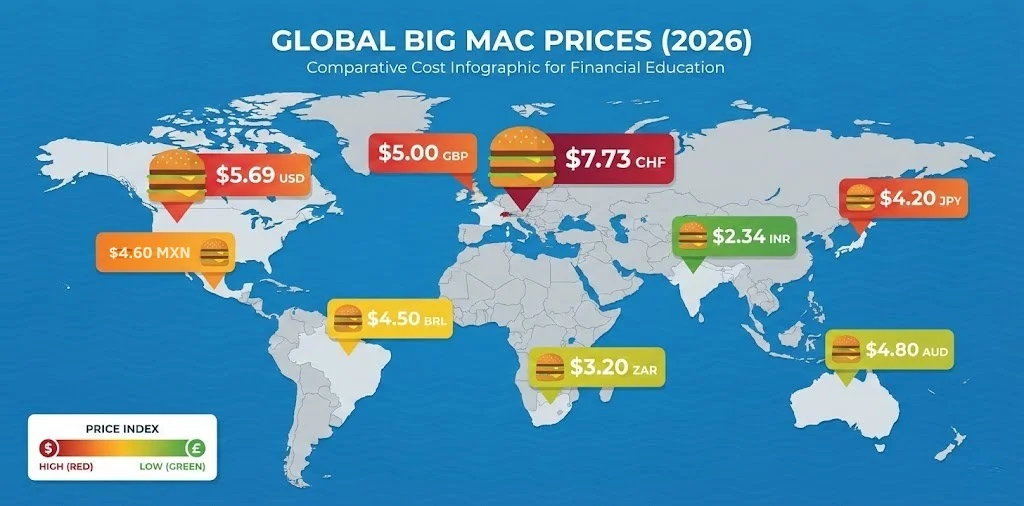
Planning a move from India to Canada or evaluating a job offer across borders? Understanding the real purchasing power of your salary is critical. A simple India to Canada salary conversion won’t tell you the full story.
PPP Calculator India vs Canada guide shows you how to use a Purchasing power parity calculator to compare salaries between India and Canada, helping you make informed decisions about immigration, remote work, and international career moves.
Key Takeaways
- PPP measures purchasing power, not currency value: A simple exchange rate conversion doesn’t show what your salary can actually buy in different countries.
- Canada requires significantly higher nominal salaries: To match ₹10 lakhs in India, you need approximately CAD 77,000 in Canada due to higher living costs.
- Major cities are more expensive: Toronto and Vancouver require 15-25% higher salaries than Calgary or Halifax to maintain the same lifestyle.
- Tax implications matter: PPP shows gross salaries. Canadian taxes are higher, but you receive more public services. Calculate after-tax income separately.
- Use PPP for salary negotiations: Understanding purchasing power helps you negotiate fair compensation when moving between countries or working remotely.
What is PPP and Why Does It Matter for India-Canada Comparisons?
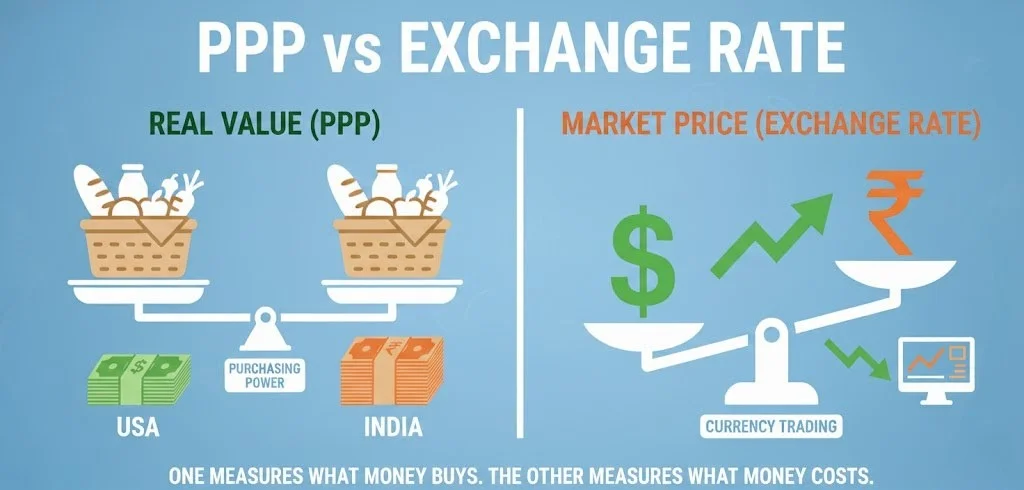
Purchasing Power Parity (PPP) measures what your money can actually buy in different countries. Unlike exchange rates that simply convert currency values, PPP accounts for the real cost of living, including housing, food, transportation, healthcare, and everyday expenses.
When comparing salaries between India and Canada, the exchange rate might show that CAD 60,000 equals approximately ₹36 lakhs. But PPP tells you something more important: how much you need to earn in Canada to maintain the same lifestyle you have in India.
PPP and Exchange Rates: Exchange rates convert currency whereas PPP converts lifestyle. For anyone considering immigration to Canada from India or negotiating international salaries, PPP provides the real picture of your purchasing power.
How the PPP Calculator Works for India vs Canada
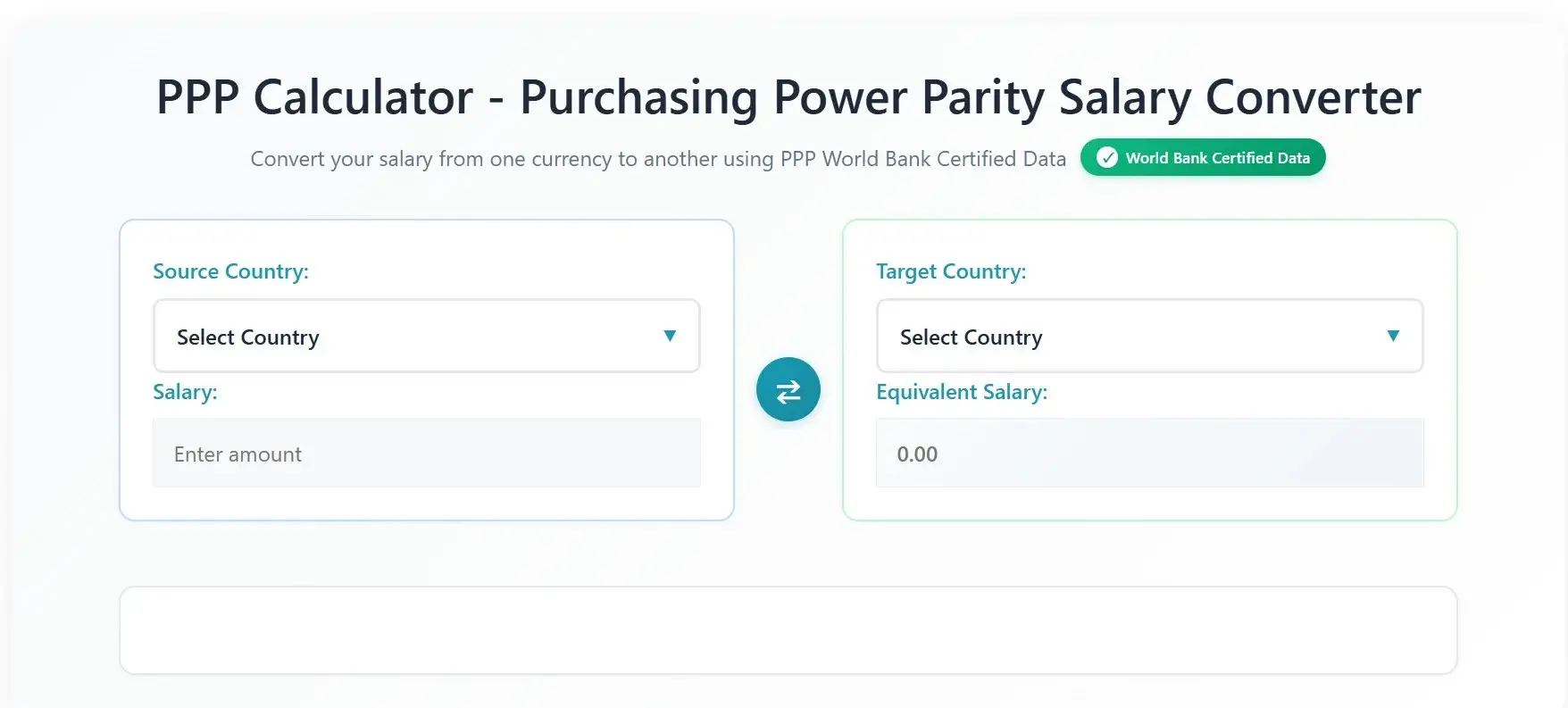
Our PPP calculator India vs Canada uses official World Bank data to compare purchasing power between countries. The process is straightforward:
- Step 1: Enter your current salary in India (in rupees)
- Step 2: Select India as your source country
- Step 3: Select Canada as your target country
- Step 4: See what salary you need in Canada to maintain equivalent purchasing power
The calculator automatically adjusts for price differences in both countries, showing you the salary required in Canada to afford the same basket of goods and services you currently purchase in India. Check detailed step by step guide on how to use PPP Calculator
Real Salary Comparisons India to Canada
Let’s look at verified examples across different salary levels to understand purchasing power differences:
Entry-Level Professional Example
Scenario: Software developer earning ₹8,00,000 per year in Bangalore
To maintain the same purchasing power in Canada, you would need approximately CAD 45,000 per year.
What this means: While ₹8 lakhs might provide a comfortable lifestyle in Bangalore with the ability to save, afford good housing, and enjoy social activities, you’d need CAD 45,000 in Canada to afford similar lifestyle choices, housing quality, and savings potential.
Mid-Career Professional Example
Scenario: Project manager earning ₹20,00,000 per year in Mumbai
To match this purchasing power in Canada, you would need approximately CAD 1,12,600 per year.
Interpretation: Your ₹20 lakh salary in Mumbai buys a certain quality of housing, transportation, dining, and entertainment. In Canada, particularly in major cities like Toronto or Vancouver, you’d need CAD 1,12,600 to afford comparable lifestyle standards.
Senior Professional Example
Scenario: Senior engineer earning ₹35,00,000 per year in Pune
The equivalent purchasing power in Canada would require approximately CAD 1,97,000 per year.
Analysis: This higher salary in India provides access to premium housing, private schools, household help, and significant savings. Achieving the same standard of living in Canada requires a substantially higher nominal salary due to Canada’s higher cost structure for services, housing, and education.
Understanding Reverse Calculations: Canada to India
The calculator also works in reverse. If you’re earning in Canada and considering a return to India, or evaluating an Indian job offer, you need different calculations.
Example: Canadian Salary to Indian Equivalent
Scenario: Earning CAD 80,000 per year in Toronto
To maintain equivalent purchasing power if moving to India, you would need approximately ₹12,50,000 per year.
Why the numbers seem different: This demonstrates why Canada is more expensive. Your CAD 80,000 in Toronto provides a certain lifestyle. Moving to India, you’d need only ₹14.20 lakhs to maintain similar purchasing power because India’s overall cost of living is lower, particularly for services, food, and transportation.
Key Cost of Living Differences: India vs Canada
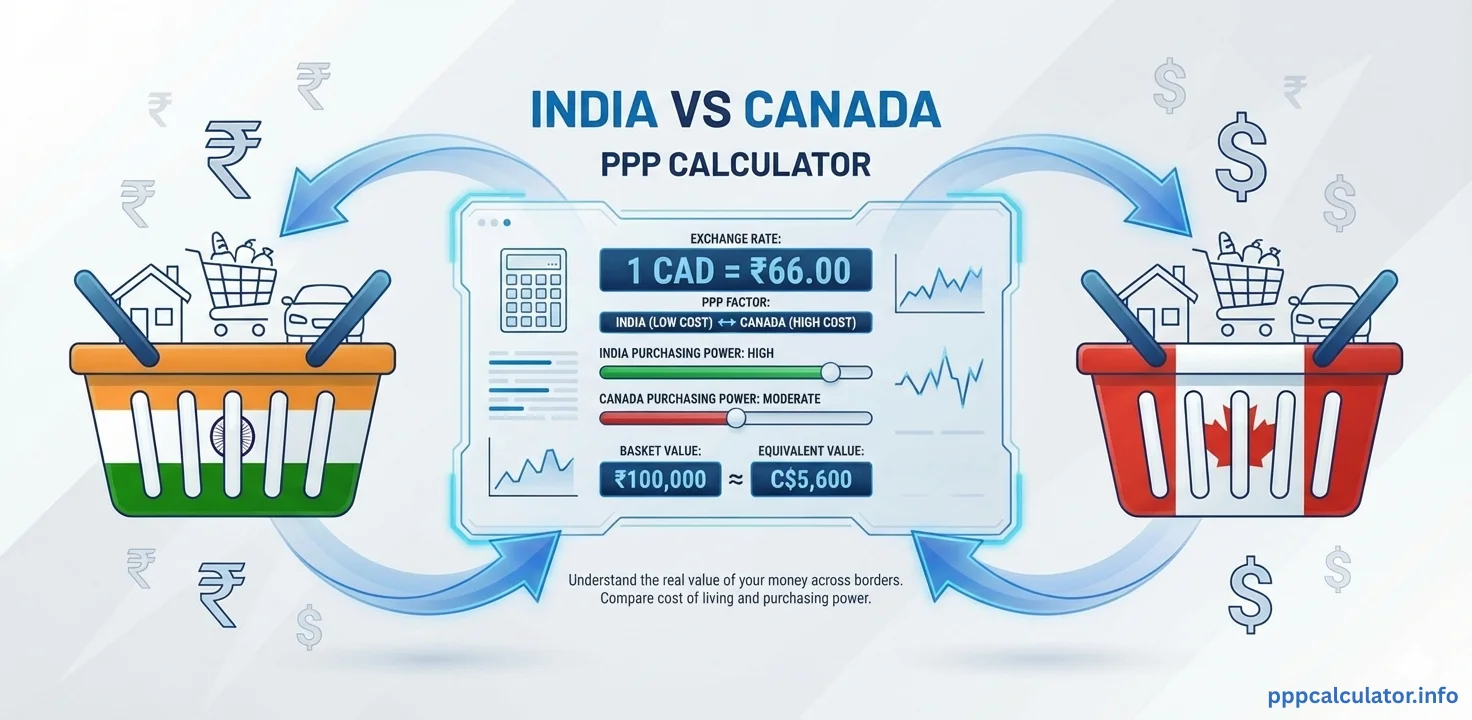
Understanding what drives these PPP differences helps you evaluate job offers more accurately.
Housing Costs
India: Rental costs in major cities like Mumbai, Bangalore, and Delhi vary widely. A 2BHK apartment might cost ₹25,000-₹60,000 per month depending on location.
Canada: In cities like Toronto or Vancouver, a similar 2-bedroom apartment costs CAD 2,200-3,500 per month. Even in smaller cities like Calgary or Halifax, expect CAD 1,500-2,200 monthly.
PPP Impact: Housing is significantly more expensive in Canada relative to income, which is why PPP-adjusted salaries need to be higher to maintain comparable living standards.
Food and Groceries
India: Groceries and eating out are generally affordable. A monthly grocery bill for a family might be ₹15,000-₹25,000, with affordable restaurant meals available.
Canada: Grocery costs are higher, with a family easily spending CAD 800-1,200 monthly. Restaurant meals are also more expensive due to higher labor costs.
PPP Factor: Canada’s food costs are approximately 3-4 times higher than India when adjusted for purchasing power.
Transportation
India: Public transportation is affordable, and fuel costs are moderate. Owning a vehicle costs ₹5,000-₹15,000 monthly including fuel and maintenance.
Canada: Public transit is more expensive (CAD 120-180 monthly), and car ownership costs CAD 500-800 monthly including insurance, fuel, and maintenance.
Healthcare and Insurance
India: Healthcare costs vary widely. Middle-class families might spend ₹20,000-₹50,000 annually on health insurance and medical expenses.
Canada: While Canada offers universal healthcare for basic medical services, you may need private insurance for dental, vision, and prescription drugs, costing CAD 100-300 monthly.
Using PPP Calculator for Salary Negotiations
If you’re negotiating an international job offer between India and Canada, the PPP calculator becomes your strongest tool.
For Indians Moving to Canada
Your negotiation framework:
- Calculate your current salary’s PPP equivalent in Canada
- Research typical market salaries for your role in Canada
- Factor in tax differences between countries
- Consider benefits like healthcare coverage, retirement contributions
- Account for relocation costs and initial settling expenses
Example negotiation scenario: You earn ₹18 lakhs in India. The PPP calculator shows you need CAD 1,01,300 in Canada for equivalent purchasing power. However, market rate for your role in Toronto is CAD 95,000-1,25,000. You should negotiate toward the higher end of that range, explaining that you’re maintaining similar financial stability to your current position.
For Companies Hiring from India
HR teams can use PPP to set fair global compensation:
- Determine local market salary for the role in India
- Use PPP calculator to find equivalent Canadian salary for Indians
- Adjust for Canadian market conditions
- Create salary bands that account for purchasing power differences
- Ensure equity between local and international remote workers
City-Specific Comparisons: Major Indian Cities vs Canadian Cities
Different cities have different cost structures. Here’s how major cities compare:
- Mumbai to Toronto: Toronto is Canada’s most expensive city, similar to Mumbai’s position in India. However, the cost multiplier is significant. What you buy with ₹1 lakh in Mumbai requires approximately CAD 8,000 in Toronto for equivalent purchasing power.
- Bangalore to Vancouver: Both are tech hubs with high living costs relative to their countries. Vancouver is among Canada’s most expensive cities. Your ₹15 lakh salary in Bangalore would need to be approximately CAD 1,15,000 in Vancouver to maintain similar lifestyle standards.
- Delhi to Montreal: Montreal offers better affordability than Toronto or Vancouver. If you earn ₹12 lakhs in Delhi, you’d need approximately CAD 88,000 in Montreal for equivalent purchasing power, making Montreal attractive for immigrants seeking better value.
- Pune to Calgary: Both are secondary cities offering better affordability than their countries’ top metros. Your ₹10 lakh Pune salary would require approximately CAD 56,300 in Calgary to maintain comparable purchasing power and lifestyle.
Immigration Considerations Beyond Salary
When using the PPP calculator for immigration planning, remember that salary is only one factor:
Tax Implications
- India: Tax rates range from 0-30% plus cess, depending on income bracket. Various deductions reduce taxable income.
- Canada: Federal and provincial taxes combined can reach 20-50% depending on province and income level. However, you receive more government services for your tax dollars.
- Net impact: Your after-tax income purchasing power matters more than gross salary. Use tax calculators alongside PPP calculators for complete pictures.
Benefits and Social Services
Canada advantages:
- Universal healthcare coverage
- Strong social security system
- Employment Insurance benefits
- Canada Pension Plan contributions
- Paid parental leave benefits
India considerations:
- Lower mandatory benefits costs
- More flexibility in benefit choices
- Growing healthcare coverage options
Quality of Life Factors
PPP doesn’t capture everything:
- Work-life balance policies
- Environmental quality
- Safety and security
- Education system quality
- Career growth opportunities
- Immigration pathway to permanent residence
Common Mistakes When Using PPP Calculators
Avoid these errors when comparing salaries through PPP salary calculator India Canada:
1. Confusing PPP with exchange rates : PPP and currency exchange are different. Exchange rates tell you conversion values. PPP tells you purchasing power. Don’t use exchange rates to evaluate job offers.
2. Ignoring individual spending patterns: PPP uses average baskets of goods. Your personal spending might differ significantly. If you spend heavily on categories that are particularly expensive in Canada (like childcare or housing), you’ll need more than the PPP equivalent.
3. Forgetting about taxes: PPP calculators show gross salary equivalents. Always calculate after-tax income for realistic comparisons.
4. Assuming uniform costs across cities: Toronto and rural Saskatchewan have vastly different costs. Mumbai and Jaipur do too. Always specify cities, not just countries.
5. Not accounting for lifestyle changes: Moving countries often changes spending patterns. You might use a car more in Canada than you did in India. Account for these behavioral changes.
Conclusion
The PPP calculator India vs Canada is essential for anyone comparing salaries between India and Canada. It reveals the real value of your earnings beyond simple currency conversion. Whether you’re evaluating a job offer, planning immigration, or setting compensation for international teams, understanding purchasing power parity ensures you make informed decisions.
Remember that PPP provides the baseline comparison, but your personal circumstances, career goals, and lifestyle preferences should guide your final decision.
Ready to compare your salary? Visit our PPP India Canada Calculator to see what your Indian salary is worth in Canada, or calculate what Canadian salary you need to maintain your current lifestyle.
PPP Calculator India vs Canada – FAQs
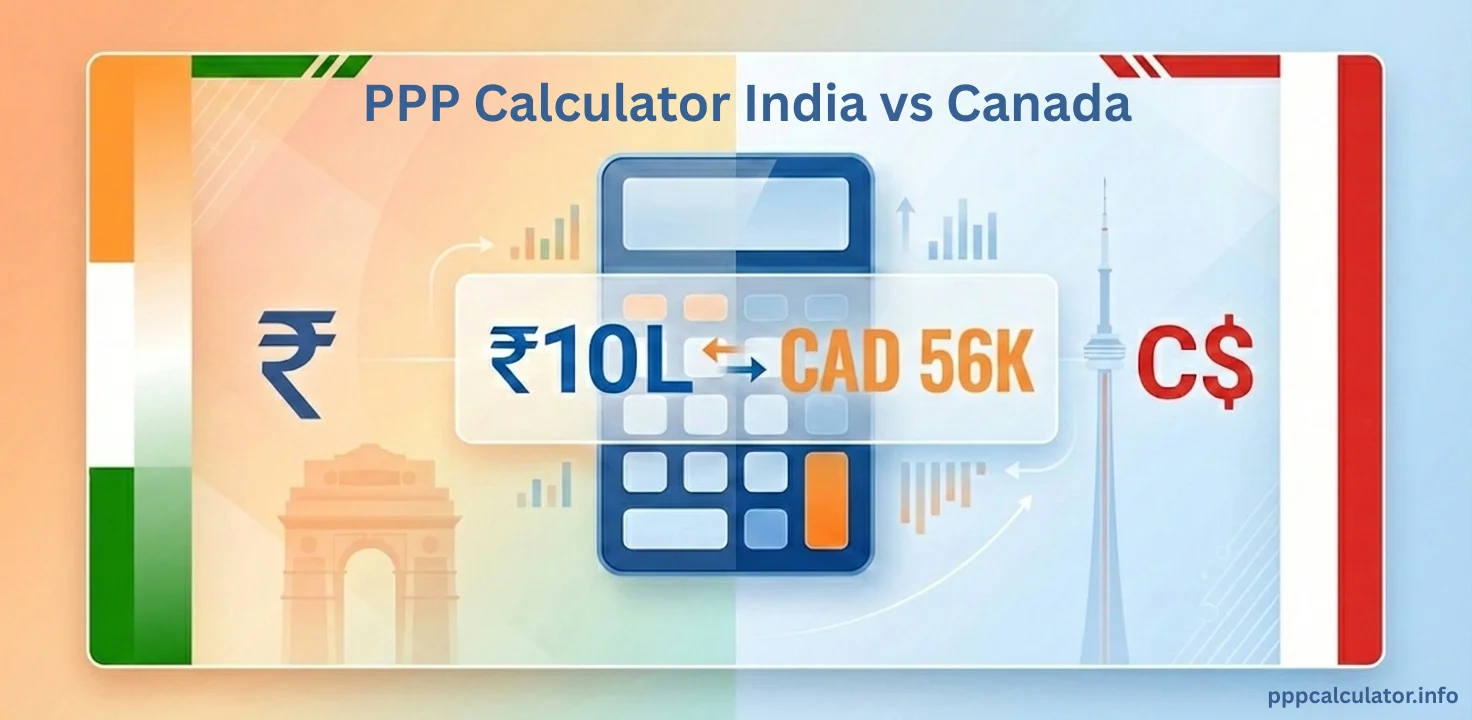
Ans: To maintain the same purchasing power as ₹10,00,000 in India, you would need approximately CAD 56,000 in Canada. This varies based on specific cities and personal spending patterns.
Ans: CAD 70,000 is approximately equivalent to ₹12 lakhs in India in terms of purchasing power. It’s considered a decent middle-class salary in smaller Canadian cities, but may be tight in expensive cities like Toronto or Vancouver.
Ans: To match ₹20 lakh Indian salary’s purchasing power, you need approximately CAD 1,12,600 in Canada. However, this varies significantly by city and lifestyle choices.
Ans: No, PPP calculators show gross salary equivalents based on purchasing power. You must separately calculate after-tax income in both countries for accurate comparison.